Still on the first point of the seven processes. In thinking about the frame and Shariaa, I could not ignore Abrahm Maslow’s Pyramid of needs.
Founder of the humanistic school, Abraham Maslow was first to take into account the impact of external factors on the person’s psyche, contrary to Freud’s take which focused primarily on the internal world of the individual.
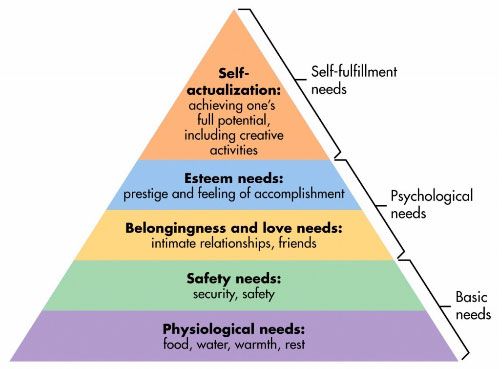
At the base of the pyramid are physiological needs, followed by safety needs then love and belonging needs, esteem needs, and finally at the top self-actualization needs. The image below explains what each level entails.
However, I stumbled upon a very interesting article recently that states that in 1970, Maslow added a final apex after self-actualization which is self-transcendence:
“Having met our basic needs at the bottom of the pyramid, having worked on our emotional needs in its middle and worked at achieving our potential, Maslow felt we needed to transcend thoughts of ourselves as islands. We had to see ourselves as part of the broader universe to develop the common priorities that can allow humankind to survive as a species.” (Nichol Bradford)
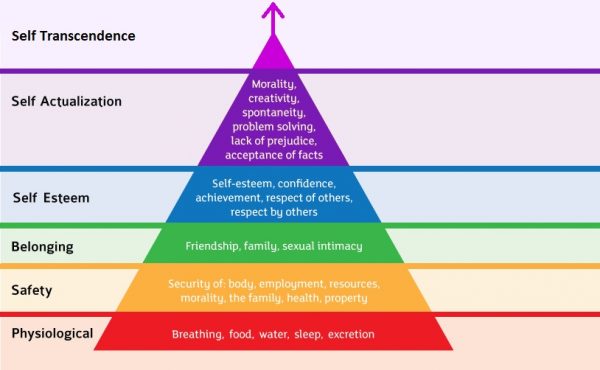
This final apex figuring at the top of the pyramid of needs as a final achievement is quiet mind boggling. The suggestion is that only when all the other needs are met can we reach that level. But all my life, Islam has taught me otherwise. In my view, from an Islamic perspective shariaa teaches us that connection, transcendence and thinking about others is at the base of our pyramid of need. That’s why we are provided from the start with a toolkit that guaranties the building of this capacity to transcend our personal needs and build the relationship, which leads me to the next point in the seven processes to effect change, which is building the relationship.
(to be continued :))
Below is the link to the article mentioned in this post.
http://bigthink.com/robby-berman/the-missing-apex-of-maslows-hierarchy-could-save-us-all


 Psychoanalysis & Beyond
Leave a reply to Laila Al-Attar Cancel reply