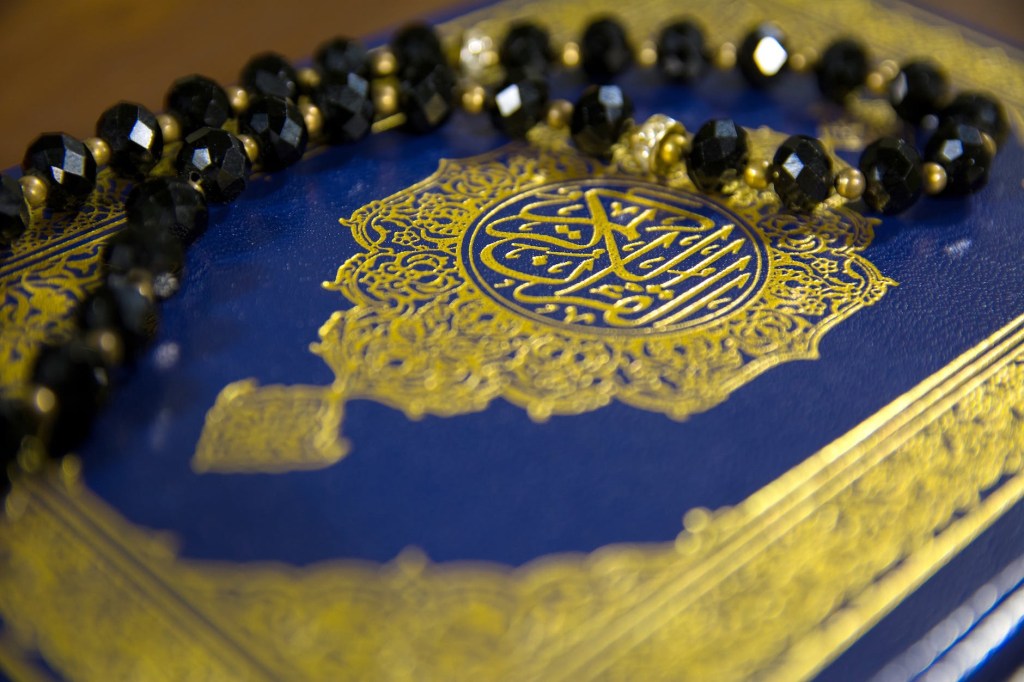
Reading the therapeutic contract in the Quran
Day # 16
On islamic concepts of the #psyche
I made reference in day # 14 to the symbolic function of the heart (to mean the psyche) but perhaps a bit of Arabic etymology is necessary here. The root verb of the word Qalb (heart) means to change or upturn something from its current state.
Thus, the heart that pumps life through our body and allows it to be in a continuous state of “living” has a parallel symbolic function. If the blood that runs in our veins carries the vitamins and minerals of life, our life impulses are also pumped into our soul through our heart.
Perhaps this is where we part from positivist psychoanalytic views as we do not believe that our life impulses are limited to our survival drives that keep the physical body alive and meet biological needs.
According to Mark Solms, drives are experienced in the mind as feelings, and this is the nature of our suffering. We suffer from feelings, whether they are hunger, thirst or sadness, they are all feelings. These feelings exert pressure on the ego to act to meet these needs. Thus the ego is constantly negotiating the tension between the pressures of the ID and the reality of the external world.
The islamic position introduces a third dimension of the ruh (spirit) which also takes agency on the heart and on governing drives and is a main agent and dimension of our life impulses. It allows the heart to be discerning, to recognise truth from falsehood. It allows us to make altruistic discussion that go against the logic of natural selection. It takes me back to the example of the heart as a reservoir mentioned in a previous reflection. It is a container filled by external streams but that has an internal filter to purify what it takes in. This innate capacity of discernement does not rely purely on our intellectual capacity, it also draws from the ruh and the fitrah that are within us.
We see in many verses that talk about transgressions against God, that they are synthesised in the end by a reference to a turbulence that afflicts the heart, like in verse 2:88 below.
So what exactly is the ruh or spirit, and what is Fitrah?
TBC
2:75 So can you [believers] hope that such people will believe you, when some of them used to hear the words of God and then deliberately twist them, even when they understood them
2:76 When they meet the believers, they say, ‘We too believe.’ But when they are alone with each other they say, ‘How could you tell them about God’s revelation [to us]? They will be able to use it to argue against you before your Lord! Have you no sense?’
2:77 Do they not know that God is well aware of what they conceal and what they reveal
2:78 Some of them are uneducated, and know the Scripture only through wish-ful thinking. They rely on guesswork
2:79 So woe to those who write something down with their own hands and then claim, ‘This is from God,’ in order to make some small gain. Woe to them for what their hands have written! Woe to them for all that they have earned
2:80 They say, ‘The Fire will only touch us for a few days.’ Say to them, ‘Have you received a promise from God- for God never breaks His promise- or are you saying things about Him of which you have no real knowledge?’
2:81 Truly those who do evil and are surrounded by their sins will be the inhabitants of the Fire, there to remain
2:82 while those who believe and do good deeds will be the inhabitants of the Garden, there to remain
2:83 Remember when We took a pledge from the Children of Israel: ‘Worship none but God; be good to your parents and kinsfolk, to orphans and the poor; speak good words to all people; keep up the prayer and pay the prescribed alms.’ Then all but a few of you turned away and paid no heed
2:84 We took a pledge from you, ‘Do not shed one another’s blood or drive one another from your homelands.’ You acknowledged it at the time, and you can testify to this
2:85 Yet here you are, killing one another and driving some of your own people from their homes, helping one another in sin and aggression against them. If they come to you as captives, you still pay to set them free, although you had no right to drive them out. So do you believe in some parts of the Scripture and not in others? The punishment for those of you who do this will be nothing but disgrace in this life, and on the Day of Resurrection they will be condemned to the harshest torment: God is not unaware of what you do
2:86 These are the people who buy the life of this world at the price of the Hereafter: their torment will not be lightened, nor will they be helped
2:87 We gave Moses the Scripture and We sent messengers after him in succession. We gave Jesus, son of Mary, clear signs and strengthened him with the Holy Spirit. So how is it that, whenever a messenger brings you something you do not like, you become arrogant, calling some impostors and killing others
2:88 They say, ‘Our hearts are impenetrably wrapped [against whatever you say],’ but God has rejected them for their disbelief: they have little faith
Next reflection
Previous reflection
https://psychobableblog.wordpress.com/2023/04/06/ramadan-reflections-psychoanalytic-perspectives-7/

 Psychoanalysis & Beyond
Leave a reply to Content page | Psychobabble, Islamic insight Cancel reply